






The Group of Seven major countries should unite in responding to China’s tighter rare earth export controls, Japanese Finance Minister Katsunobu Kato said Wednesday.
He revealed his comments, made at a meeting of the seven nations’ finance and central bank chiefs in Washington, in talks with reporters after the session.
Kato said he also told the meeting that Japan is strongly concerned about the Chinese measure. The meeting did not adopt a joint statement.
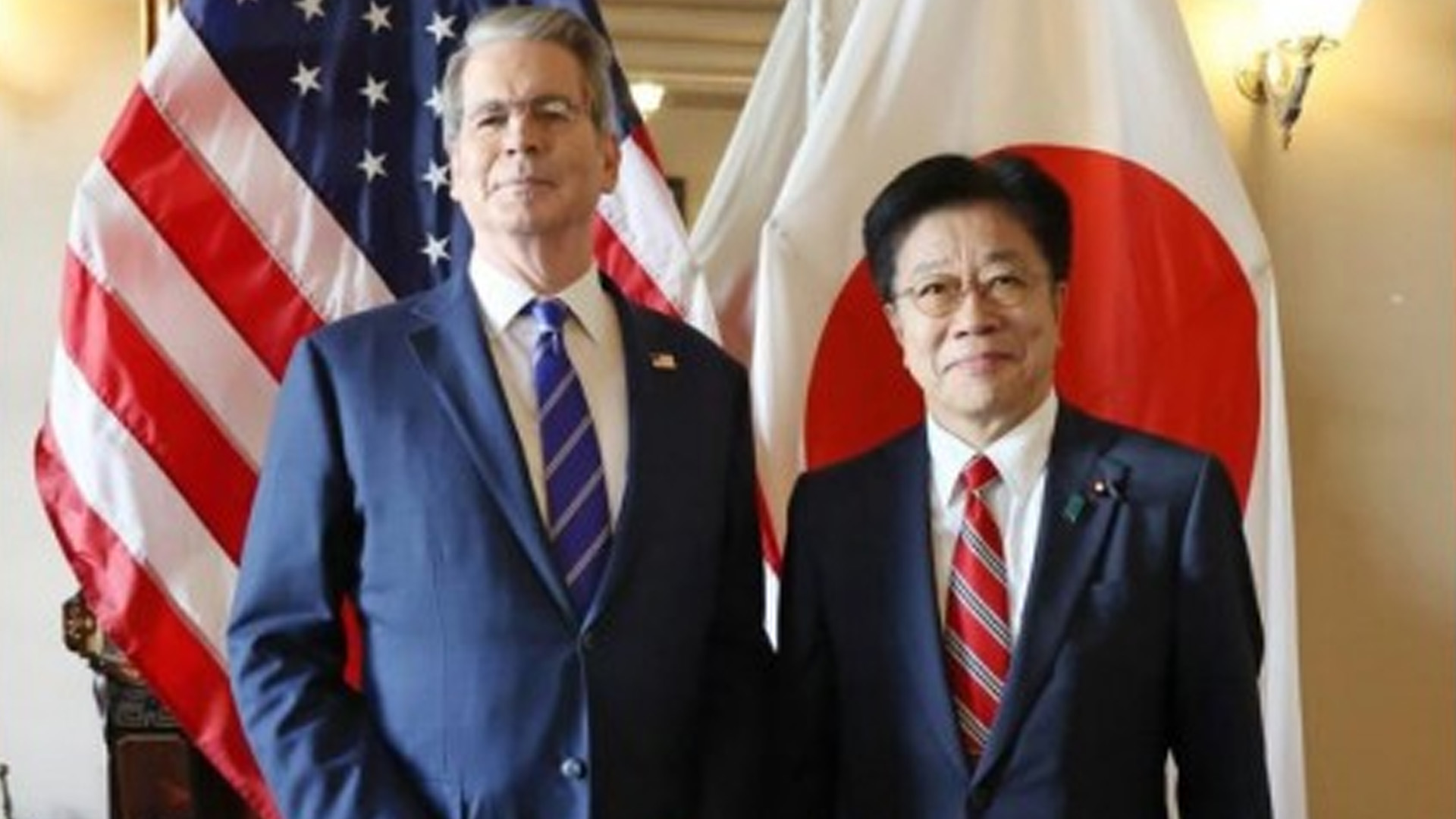
Earlier Wednesday, Kato and US Treasury Secretary Scott Bessent held a bilateral meeting for some 30 minutes, reaffirming the content of their statement adopted in September, which said, among other things, that fiscal and monetary policies “will not target exchange rates for competitive purposes.”
Kato told Bessent that Japan hopes both sides would accelerate moves to promote Japan’s investment in and loans to the United States, as agreed on in Japan-US tariff negotiations.
Bessent said in a social media post that he and Kato discussed “the (US) administration’s expectation that Japan stop importing” liquefied natural gas from Russia amid Moscow’s continued invasion of Ukraine.
At the G-7 meeting, Kato, Bank of Japan Governor Kazuo Ueda, and other participants discussed measures to support Ukraine.
The meeting among Britain, Canada, France, Germany, Italy, Japan, and the United States plus the European Union came at a time when resurging friction between the US and China over the latter’s tighter rare earth export controls is becoming a destabilizing factor for the global economy.
With US President Donald Trump having decided to impose 100 percent additional tariffs on China over the export controls, Beijing appears ready to hit back at Washington.
“If our responses cause a chain of retaliation, that could adversely affect the global economy and markets,” Kato said. “We will closely watch the risks that could be brought to financial markets by various developments.”
On the foreign exchange market, Kato said, “Rapid moves have been seen,” referring to the yen’s recent weakening.
“We are carefully monitoring excessive and disorderly movements on the currency market,” he said.
Also in Washington, a meeting of finance ministers and central bank chiefs of the Group of 20 advanced and emerging economies kicked off on Wednesday for a two-day run, with impacts of the US high tariff policy on the world economy likely to be high on the agenda.
The participating officials are also expected to examine risks in the financial markets and discuss debt issues of developing countries. (PNA)